The report arrives sooner than expected, and the team has time to discuss the findings before the decision meeting. That is an attractive outcome for AI-led research. It becomes more valuable when the important questions have already received the attention they need.
Speed and review can support each other. The useful checks concern whether the study asks the right question, gives participants a clear experience, and supports the interpretation the organization wants to use. Put those checks where they can affect the work, with attention proportionate to the consequences. A longer approval chain isn't automatically a better one.
Begin with what could follow from the finding
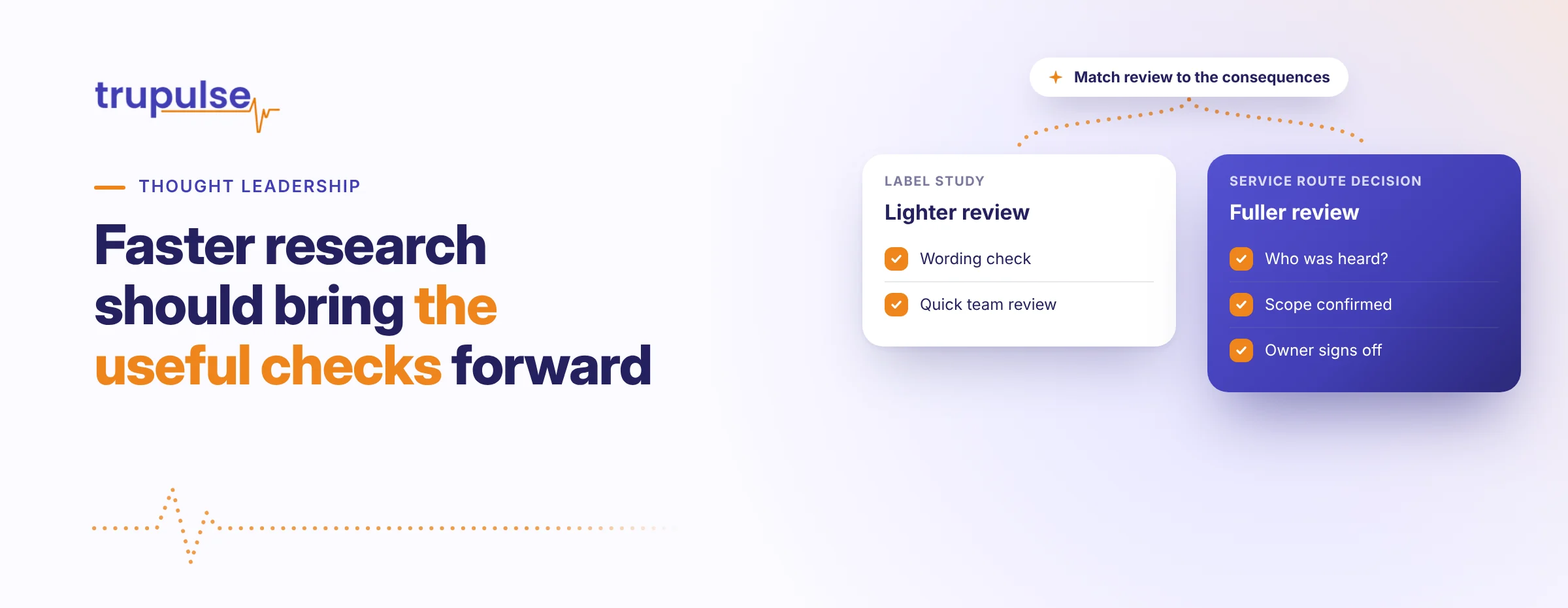
Imagine two studies about the same booking service. One explores whether people understand a revised appointment label. The other is intended to inform whether the organization should withdraw a service route used by some customers.
Both deserve clear questions, suitable participants, and truthful participation information. The second also has a more consequential intended use. The team needs to think carefully about affected people, missing experiences, alternative evidence, and who can authorize the decision. A handful of positive comments about another route wouldn't settle those questions.
NIST's AI Risk Management Framework 1.0 treats risk priorities as dependent on context and supports allocating attention accordingly. For research leaders, that suggests matching review to the use of the learning, rather than applying the same sequence to every project.
The key distinction isn't simply small study versus large study. A short exercise can be used to support an outsized claim. Ask what the organization intends to do with the result and what could happen if that interpretation is wrong.
Keep checks close to the work they protect
Before collection, check the question and the intended audience. Does the planned conversation explore the uncertainty that matters? Can the invitation reach the relevant experiences? Do participants understand the format, including AI involvement where applicable, and the actual information-use arrangements?
Before a finding is used, check what it describes. Which accounts support it? What differs? What important context or perspective remains missing? Then consider whether the proposed action follows from the evidence or depends on an assumption the study didn't examine.
The practical value of these questions is that an answer can change the plan, the wording, the interpretation, or the intended use while there is still time to do so.
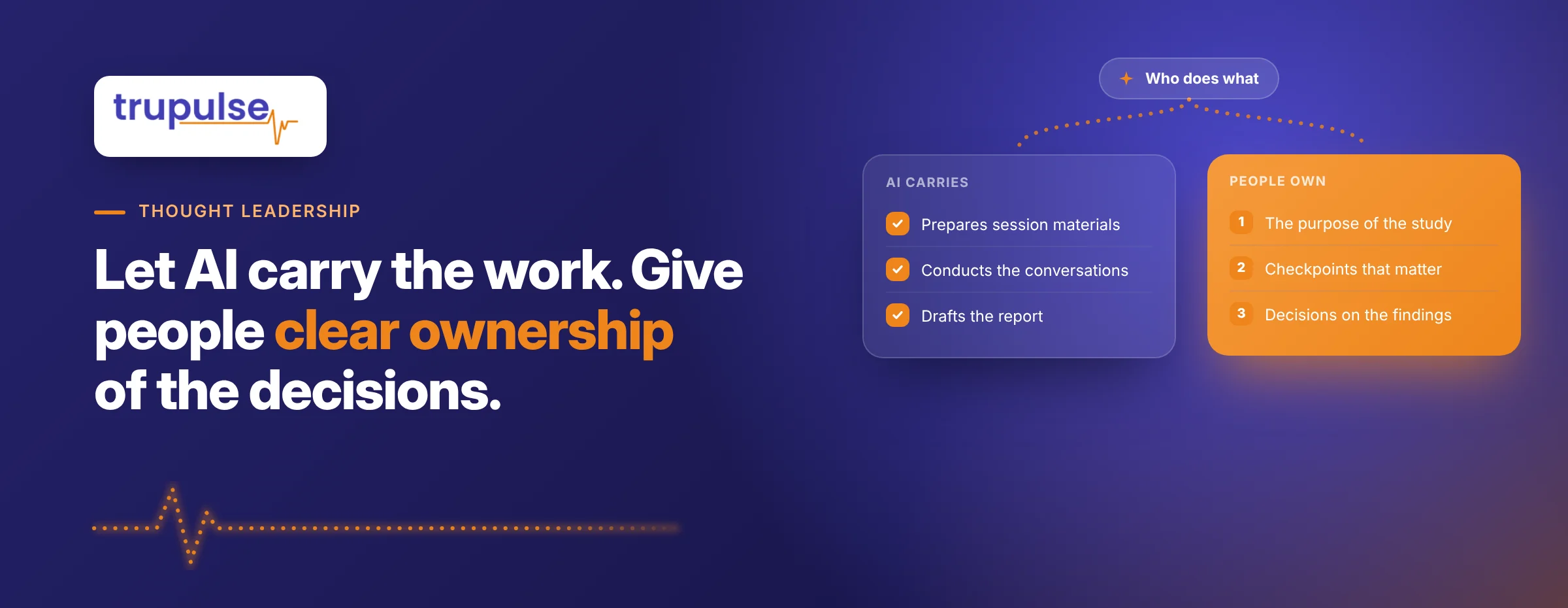
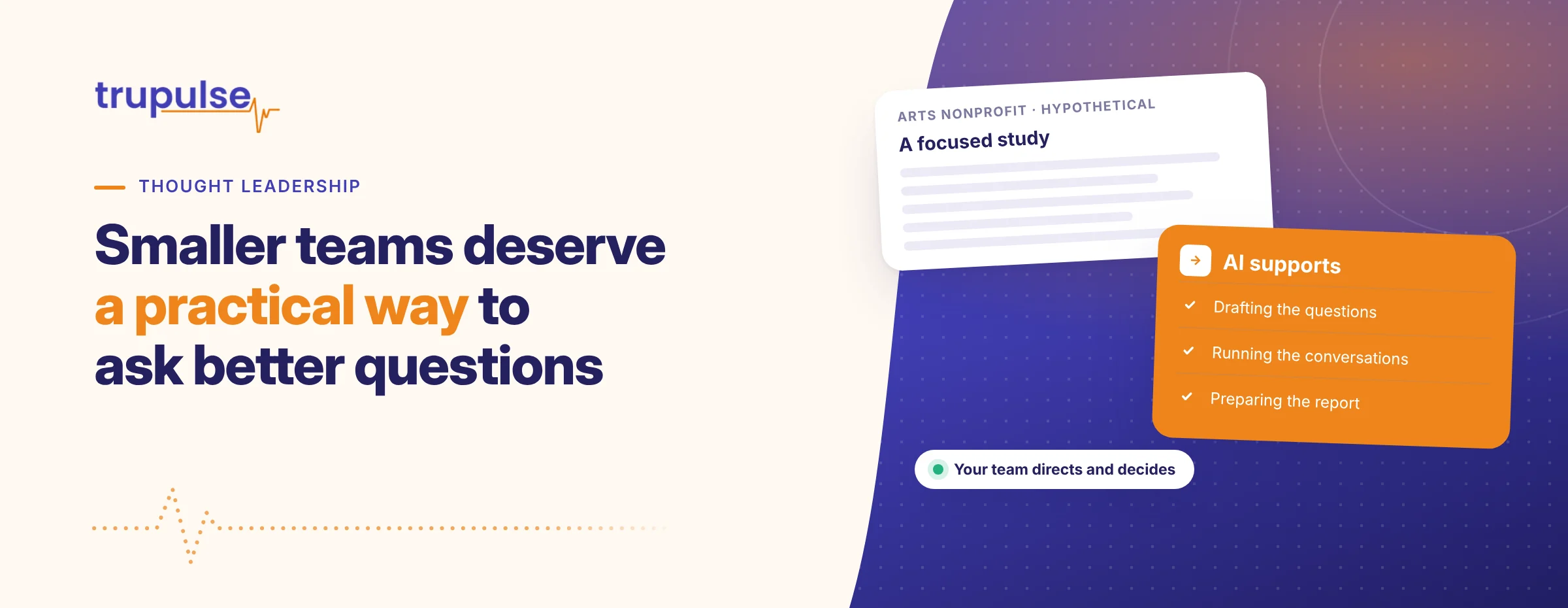
AI may take on supported creation, interviewing, and reporting tasks. People don't need to redo them all to provide useful oversight. They do need enough understanding of the work and its limits to recognize when the result is being asked to carry more than it can support.
Give different decisions different attention
For the hypothetical appointment-label study, the team might review the proposed wording, confirm that suitable users understand the participation terms, and check how they interpret the label. A service owner could then decide whether to explore a revision further. Keep the learning tied to that narrow purpose. For the service-route decision, the organization would need a fuller account of affected experiences and consequences. It might need additional methods, operational evidence, and specialist review before drawing a broad conclusion. The right plan depends on the context; no universal participant threshold resolves it.
Review can also become a waiting room. A study may pass through several people who each make minor edits while no one owns the consequential question. That can add delay without adding much judgment.
Name what each review is meant to resolve. Let qualified owners make the relevant decisions, record the reason, and avoid repeatedly reopening settled wording without a new concern. A clear question answered once is more useful than a vague approval requested several times.
Use the time you gain for a better conversation
When supported AI work makes preparation or synthesis easier, the opportunity is to spend more attention on what the organization can learn and do. That might mean examining a surprising finding, hearing a missing experience, or testing an idea before a wider commitment.
The value of a faster report is the decision conversation it makes possible. A team should be able to explain both the learning and the judgment that follows, including why the level of review fits the use.
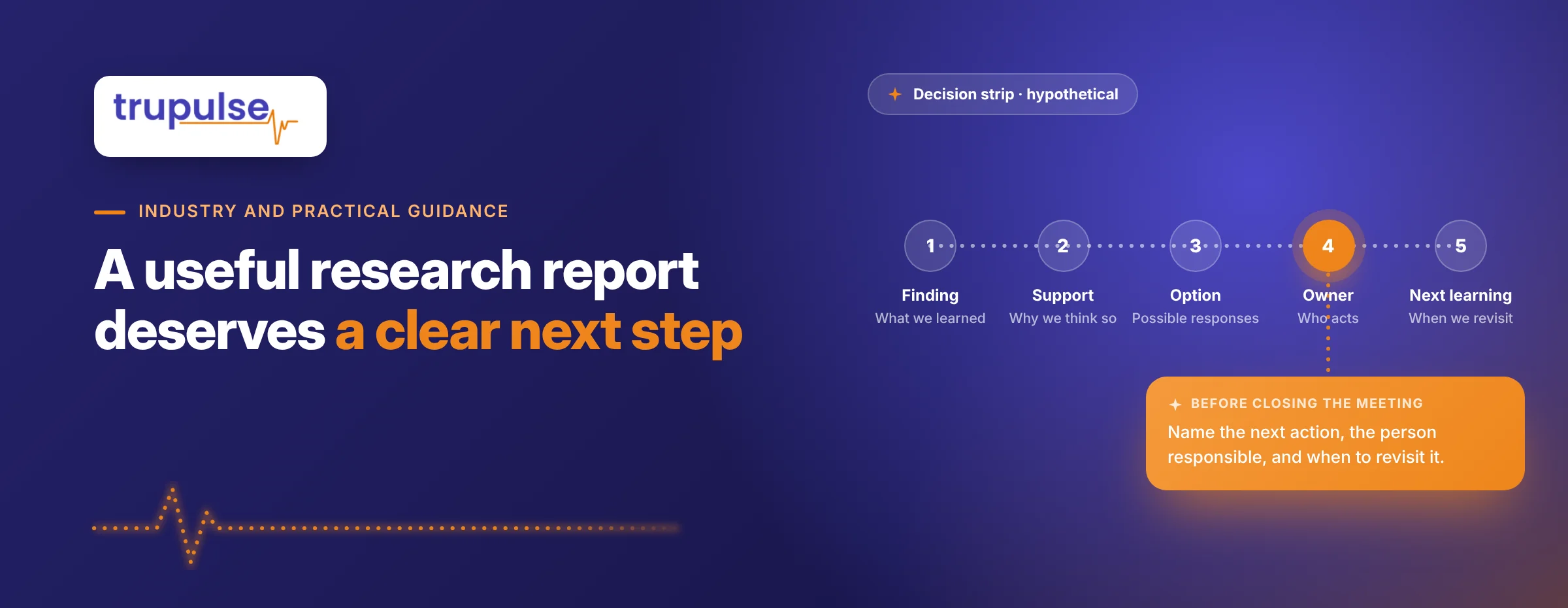
For your next timeline, choose the finding most likely to influence a consequential action. Name the check it needs, the person who can resolve it, and the point when it must happen. Build the rest of the work around that clarity, so arriving sooner also means arriving prepared.