Your advising page is online. The appointment link works. Staff are ready to help. Yet your team may still wonder why some adult students reach support easily while others stop along the way.
A booking count shows activity. A conversation can explore the choices, expectations, and confusing moments behind it. For a student-services team, the challenge is finding the capacity to hear those individual experiences and bring them together.
TruPulse’s AI-led Discussions and reporting offer a way to explore that journey while taking on the interviewing and synthesis work. Your team can concentrate on what students describe and which part of the service deserves attention.
Begin with the service question
Imagine a college exploring how adult students find course-planning advice. The team wants to understand what happens between looking for information and reaching the right appointment.
A session creator can describe that goal in TruPulse or choose an existing template as a starting point. If the format is unclear, the AI agent can help select a 1:1 Discussion, Survey, or Focus Group for the question.
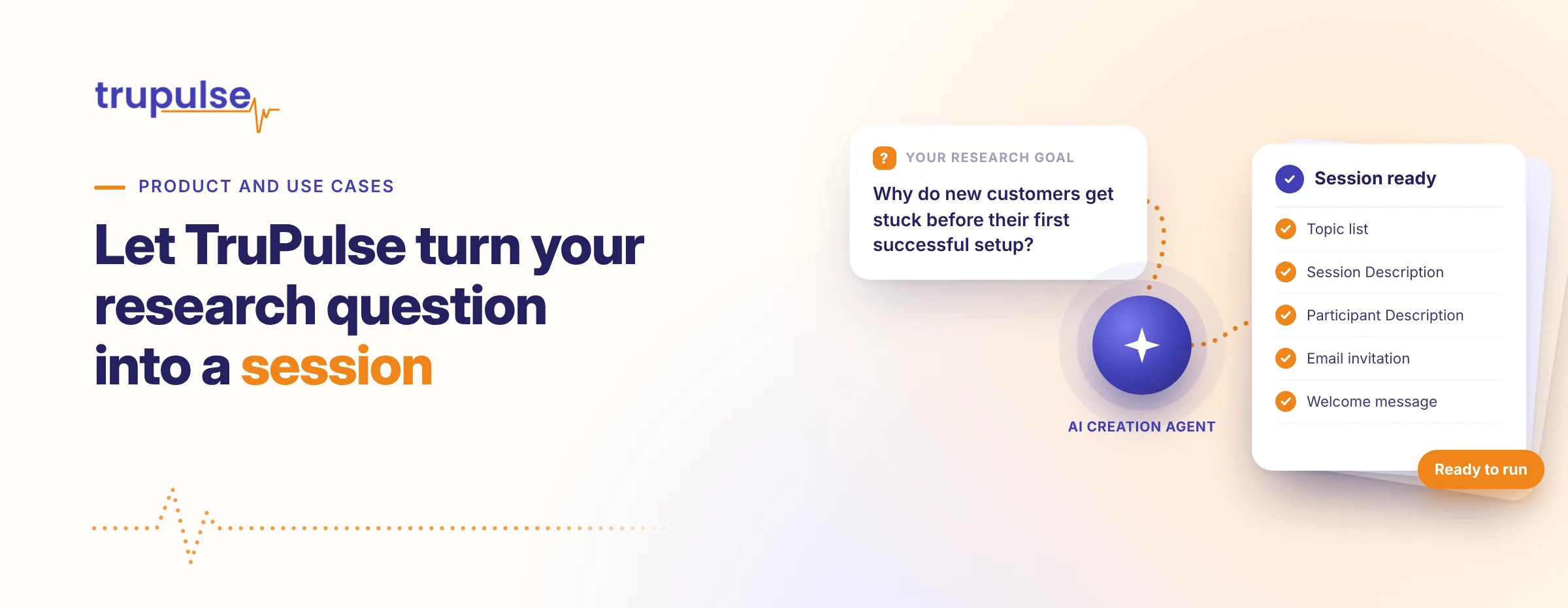
The creation agent uses a short Q&A to clarify the goals, targets, and audience. The creator can type answers or select AI-recommended responses. Once the purpose is clear, the agent prepares the session.
For a Discussion, that includes the topic list for the AI interviewer, the session and participant descriptions, the Email invitation, and the welcome message. Your team can begin with the advising question without writing all those materials separately.
Let students explain the route in their own terms
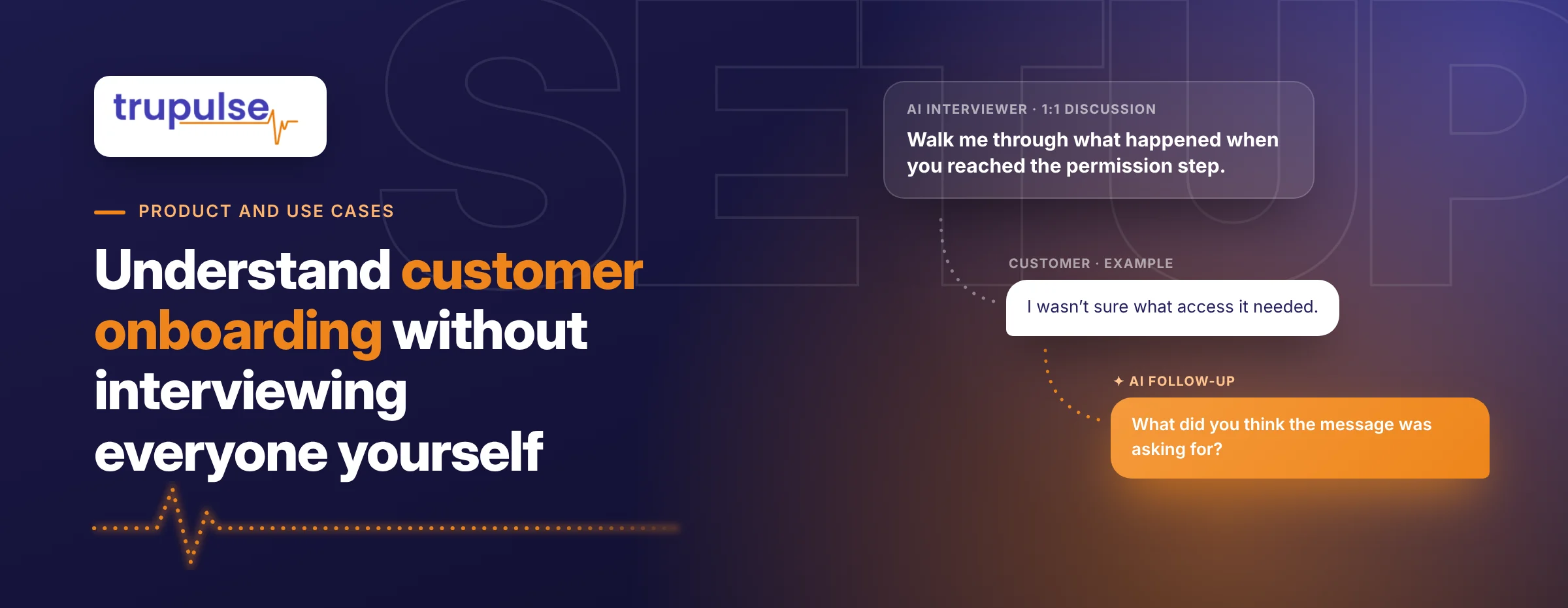
An AI-led 1:1 Discussion gives each participant a conversation about their experience, with follow-up questions that can explore relevant details. Your staff don’t need to personally conduct each interview to hear those accounts.
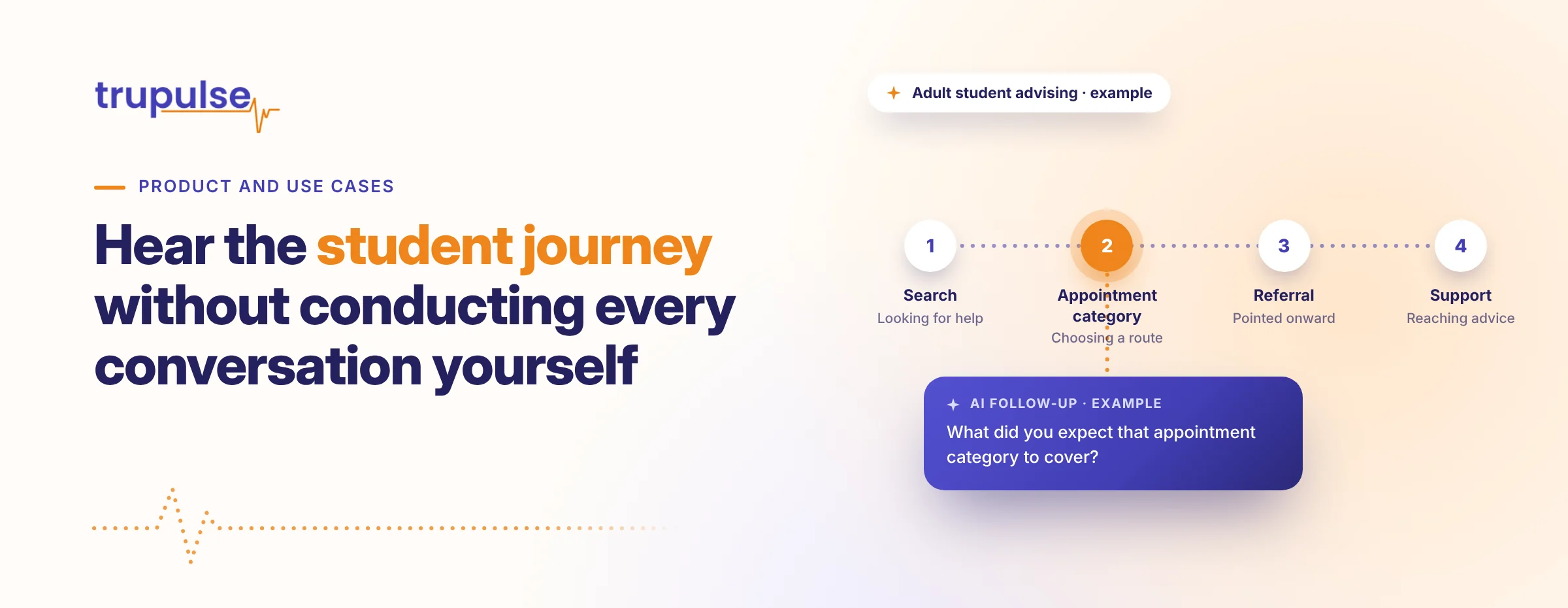
In the imagined advising example, a student might describe choosing an appointment category because its name sounded right. A follow-up could explore what they expected that category to cover.
Another student might explain that an instructor pointed them directly to the right service. That different route could help the team understand where useful guidance already exists.
The benefit is a view of service access through the student’s experience. The conversation can explore the meaning of a label or referral that a booking record alone doesn’t explain.
Get the conversations brought together for review
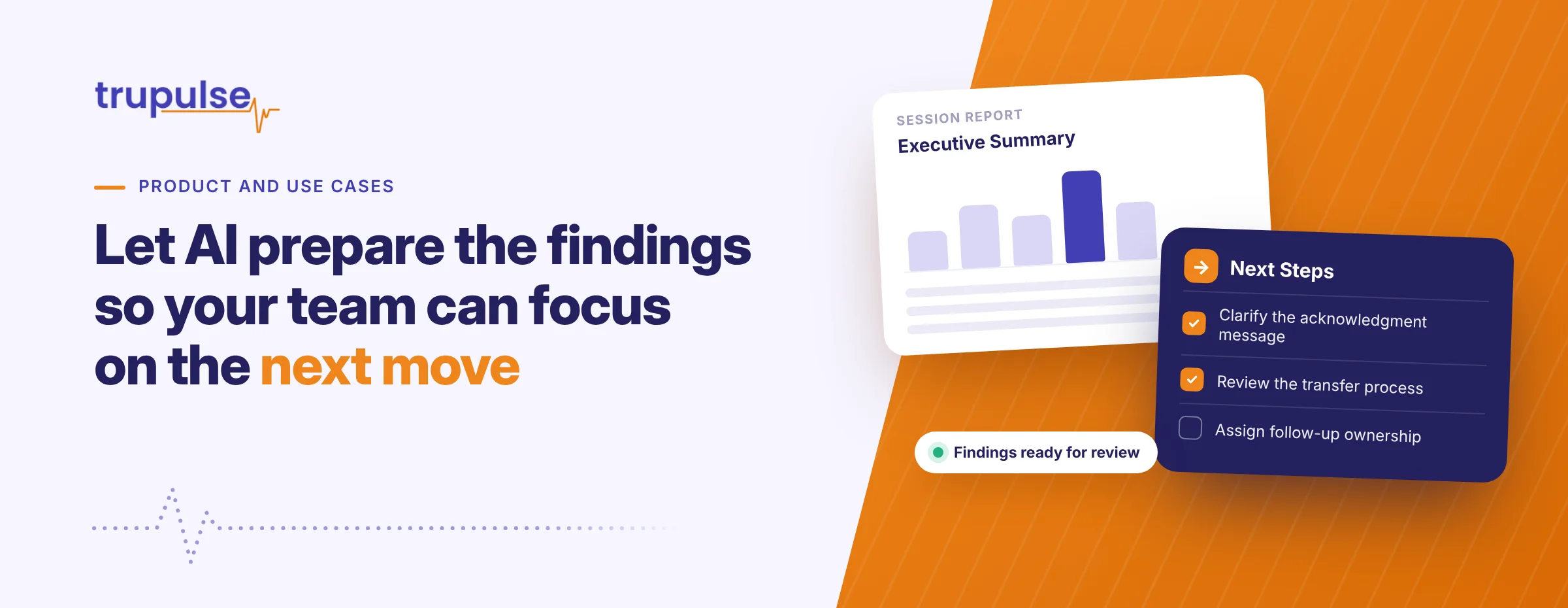
TruPulse’s 1:1 Session Report includes an Executive Summary, Key Insights, What to Watch, topic-by-topic Results Summaries, Illustrative Quotes, Automated Engagement Metrics, Conclusions, and Next Steps.
Instead of starting the analysis with a stack of conversations, the team receives a structured report to review. Topic summaries help it find the service stage it wants to discuss; quotes can make the experience easier to recognize.
There are also 1:1 Individual Reports and Discussion Chat Transcript Reports for different levels of review, subject to the institution’s arrangements for participant information and access.
For the imagined project, the useful finding could concern how students interpret appointment categories or navigate a referral. That brings the discussion closer to a service question the institution can examine.
Put staff attention where it can help most
The point of using AI here is to make listening more manageable alongside the team’s other responsibilities. TruPulse supports session creation, conducts the discussions, and prepares the reports.
Your team brings its understanding of the service and chooses what to do with the findings. It might review the appointment labels, improve referral information, or explore another part of the journey.
Individual accounts can bring a service decision into clearer focus. TruPulse handles the interviewing and report preparation, leaving staff more room to consider what the institution could improve for adult students.
Book a TruPulse demo to explore how this listening approach could fit an adult student-service question at your institution.