The new process has launched, the training is complete, and leaders want to know whether it's working. A survey asks, “How supportive are you of the change?” The answers might capture a reaction, but they leave plenty unexplained.
People can support the goal and struggle with the process. They can feel uncertain because one handoff remains unclear, or find a useful workaround the project team hasn't seen. Listening before and after a change gives you a chance to understand that experience and choose a practical response. Start with how the work happens.
Give the listening a useful purpose
Imagine a team moving from email requests to a shared request system. The immediate question is, “How do employees know where a request stands and who needs to act next?” That's more useful than treating enthusiasm as the main test of success.
Before the change, ask people to describe their most recent request. Where did they send it? How did they know it had been received? What happened if they needed an update? The answers give you an account of the existing experience, including the parts worth preserving.
After launch, explore the same task in the new setting. Don't assume uncertainty means resistance. A person who understands the purpose may still be unable to find an owner for a request. That is a service problem worth examining on its own terms.
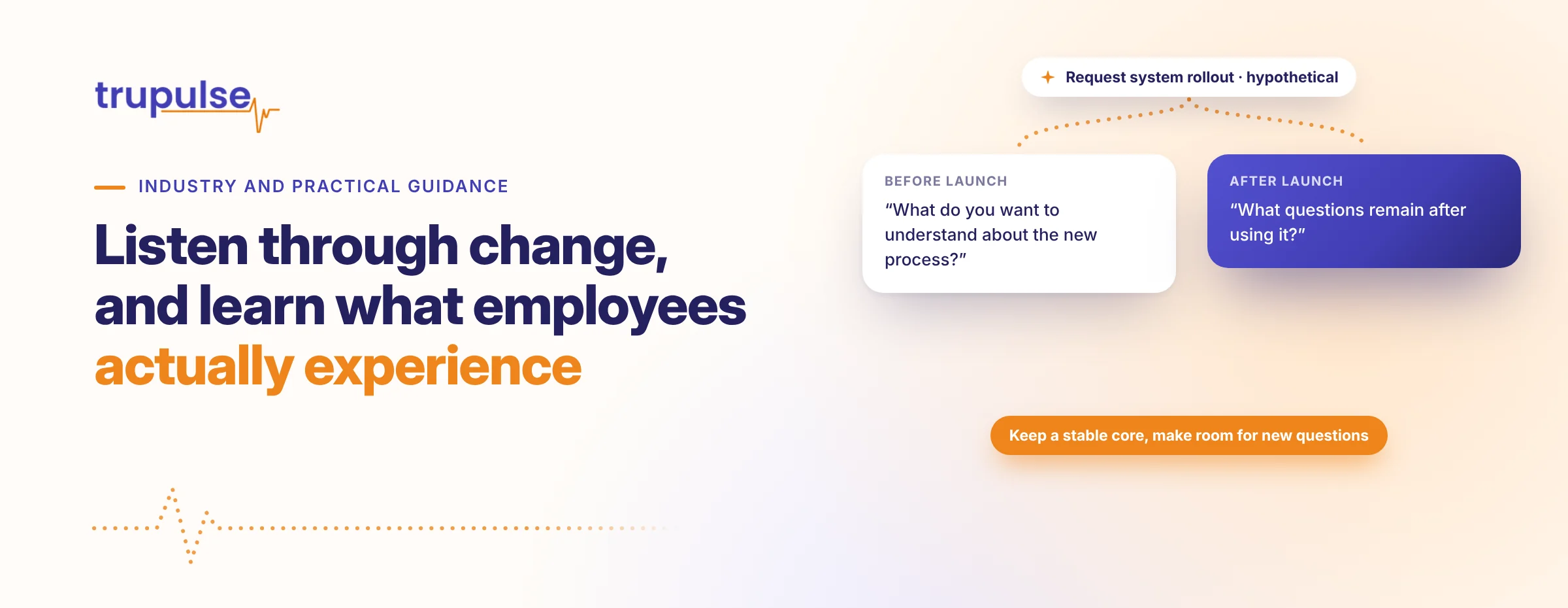
Keep a small core of questions
For the hypothetical request-system study, one core question might be, “Thinking about your most recent request, how easy or difficult was it to find out its status?” Use the same clear answer scale if you intend to compare responses later.
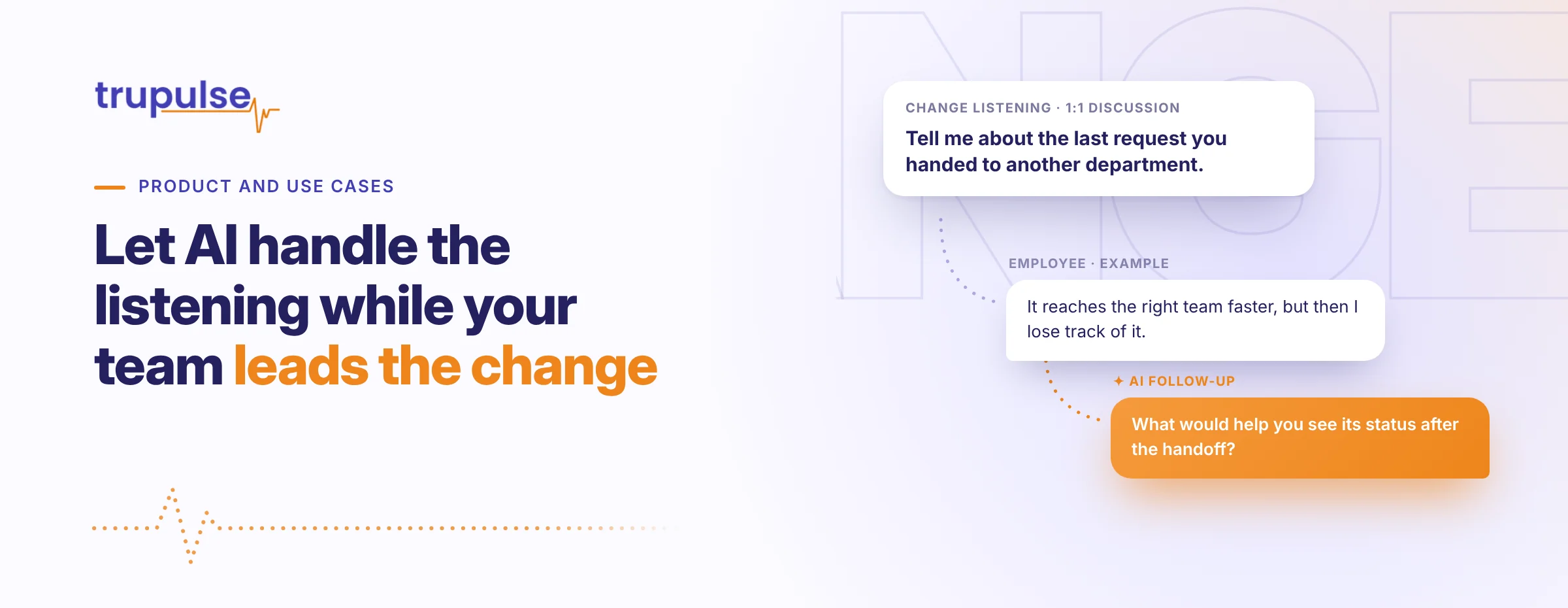
Pair it with an open question: “What happened when you needed an update?” You can then explore the detail without turning every round into a completely different study. Another useful prompt is, “What, if anything, was unclear about who needed to act next?”
Before launch, ask, “What do you want to understand about the new process?” After launch, ask, “What questions remain after using it?” These are different exploratory questions serving different moments. They can inform support and communication, but they aren't a like-for-like trend measure.
Pew Research Center's guidance explains why consistent wording and questionnaire context matter when tracking change. Preserve the comparison questions deliberately, and give new issues room elsewhere in the study.
Make participation understandable
Employees should know the purpose of the listening, what will happen to responses, and who can access the relevant information under the actual arrangements. Explain the use of AI if it conducts the session. Accurate, ordinary language is more useful than a broad reassurance that leaves people guessing.
Don't promise anonymity unless the specific setup supports it. Focus groups aren't anonymous to the other participants. Consider whether a group setting fits the subject and relationships involved, especially when people may be discussing a problem with a process owned by someone present.
The GOV.UK guidance on research notes and recordings emphasizes using material within the participation agreement and protecting personal information. In a workplace study, keep reporting and sharing consistent with the arrangements employees were given.
Respond to the experience, not the score alone
Suppose employees describe requests entering the new system successfully but remaining unclear after assignment. A useful response might be investigating ownership labels or notifications. More training could be an option, but it shouldn't become the default explanation before you've understood the difficulty.
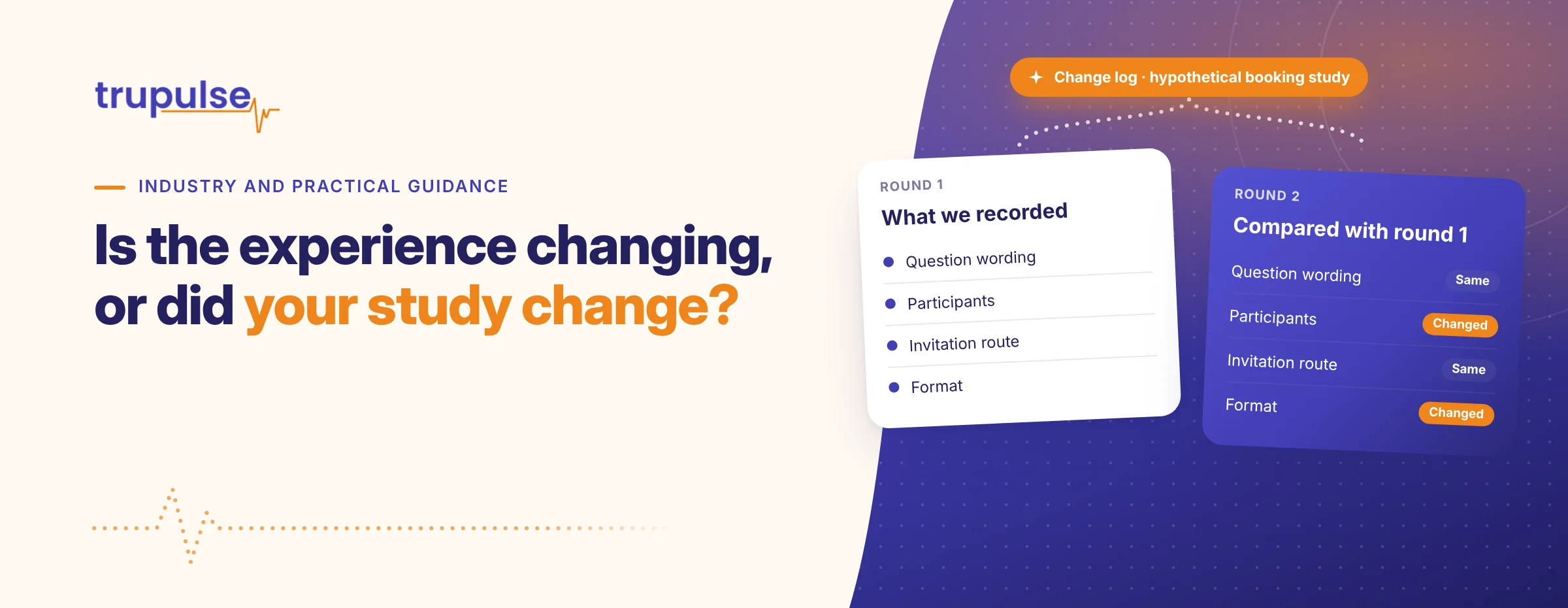
Review the accounts alongside relevant operational evidence. Has the type of work changed? Did a busy period affect the experience? Did different teams take part in the two rounds? These questions help you interpret the result without claiming the process change caused every difference.
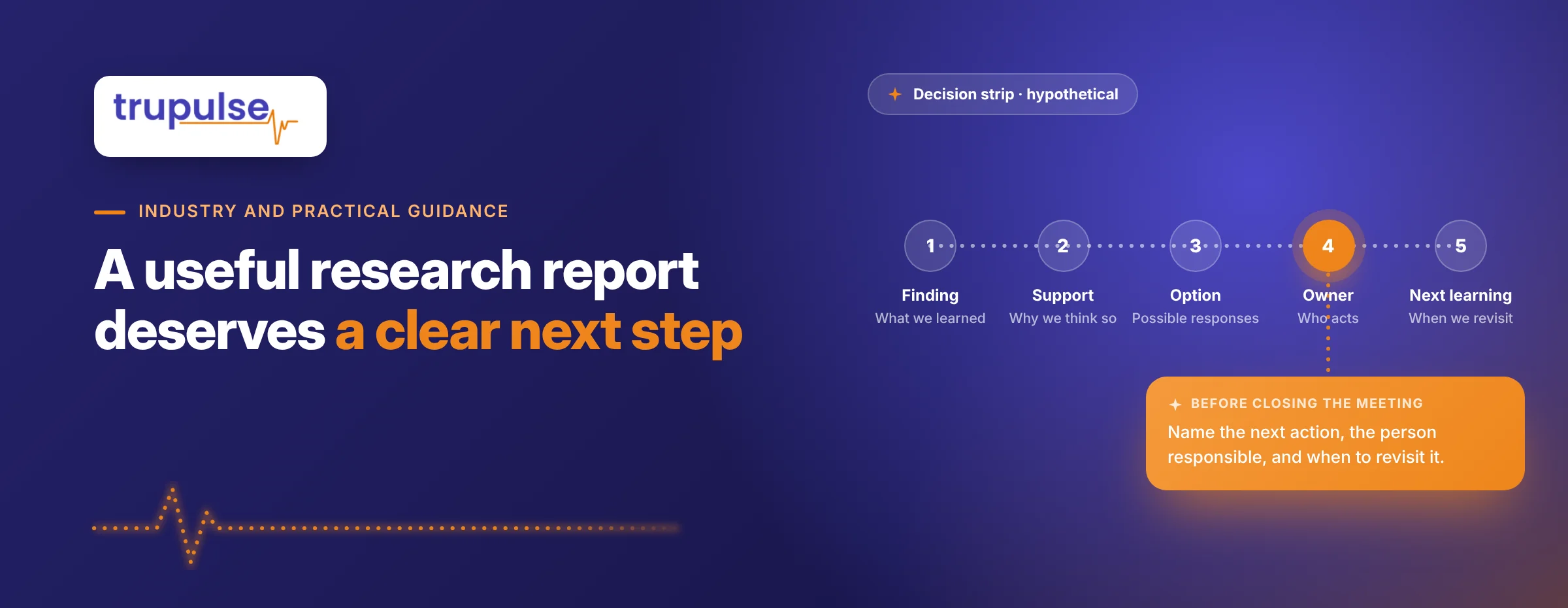
Share what you heard in terms people recognize. Explain the issue being explored, the next step, and when you expect to revisit it. If a suggestion won't be taken forward, give a useful reason where you can. Listening doesn't require promising every requested change.
Make room to hear and act
TruPulse can support change listening through AI-led discussions, surveys, and reporting. Your team provides the purpose and context while AI helps carry the listening work forward, leaving you to review experiences and choose a response.
For your next change, choose one work experience to understand before and after launch. Keep a few questions steady, leave space for new concerns, and decide who will respond to what you learn. That gives the listening a job beyond measuring approval.