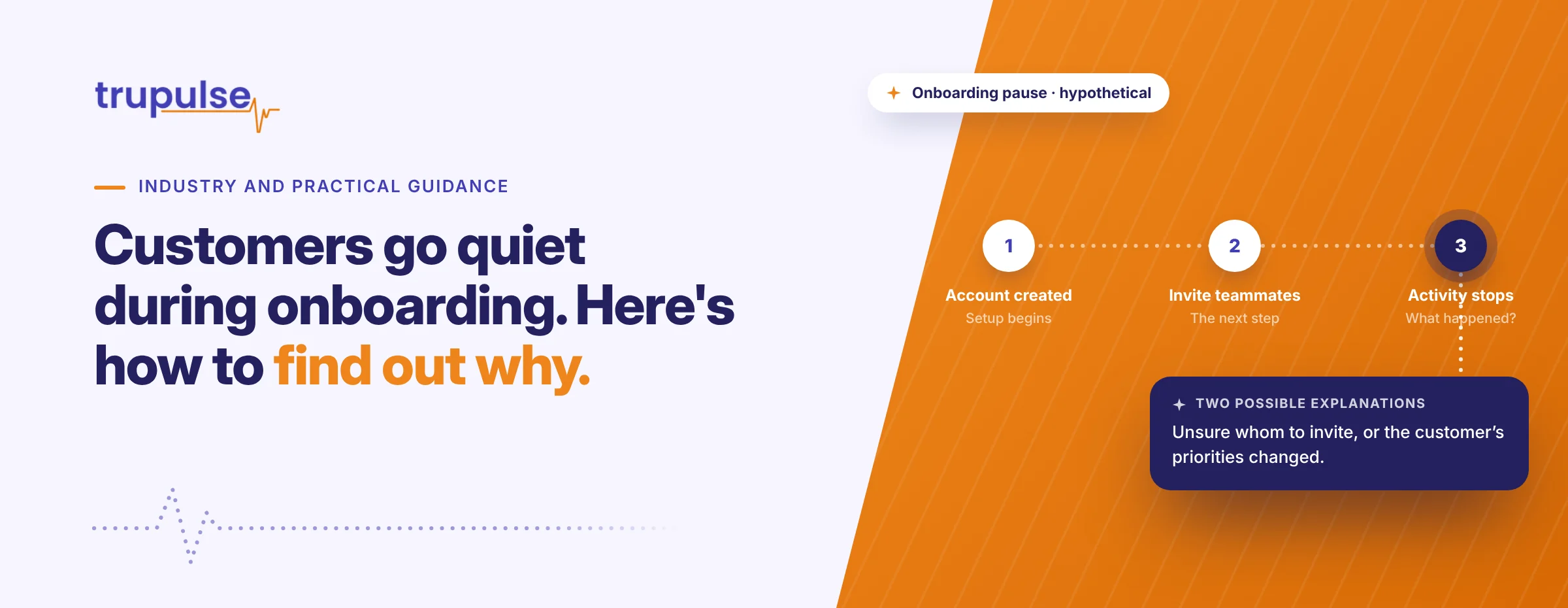
A new customer creates an account, completes the first task, and then disappears from the activity dashboard. Your team can see the stopping point. What it can't see is what happened around it.
Maybe the customer got stuck. Maybe a colleague needed to approve the next step. Maybe the product was working, but the customer's priorities changed. Before rewriting the welcome emails or adding another tutorial, a focused listening exercise can help you understand the experience behind the gap. Start with one part of onboarding and one decision you want the learning to inform.
Choose a moment you can investigate
Imagine a subscription business whose customers need to invite a teammate before they can complete setup. The team is considering changing that step. A useful research question would be: “What happens when a new customer reaches the teammate invitation, and what makes the next step clear or unclear?”
That question gives the study a boundary. You can explore what customers expected, what they did, and where the process met something outside the product. You aren't asking a small study to explain every reason for churn.
The GOV.UK discovery guidance encourages teams to consider the full service experience, including support and offline steps. For onboarding, that means remembering the customer's internal approvals and other work alongside the screens you control.
Write a short study note: the journey begins when the customer reaches the invitation step; it ends when they move forward, pause, or choose another route. The decision is whether that step needs a clearer explanation, a different sequence, or further investigation.
Hear from people who took different paths
Include customers who moved through the step, people who paused, and people who used support or another workaround. The contrasts can help you discover why a step that feels obvious to one person feels uncertain to another.
Choose a recent enough experience for people to discuss in detail, and define that period consistently. Check who your invitation route can actually reach. Customers who still open your emails may have different experiences from those who no longer engage with them.
Keep the invitation factual and welcoming. You're trying to learn about onboarding, including what worked, rather than asking customers to defend why they stopped. Participation details should explain what the conversation involves and how the information will be used.
Let customers walk you through the experience
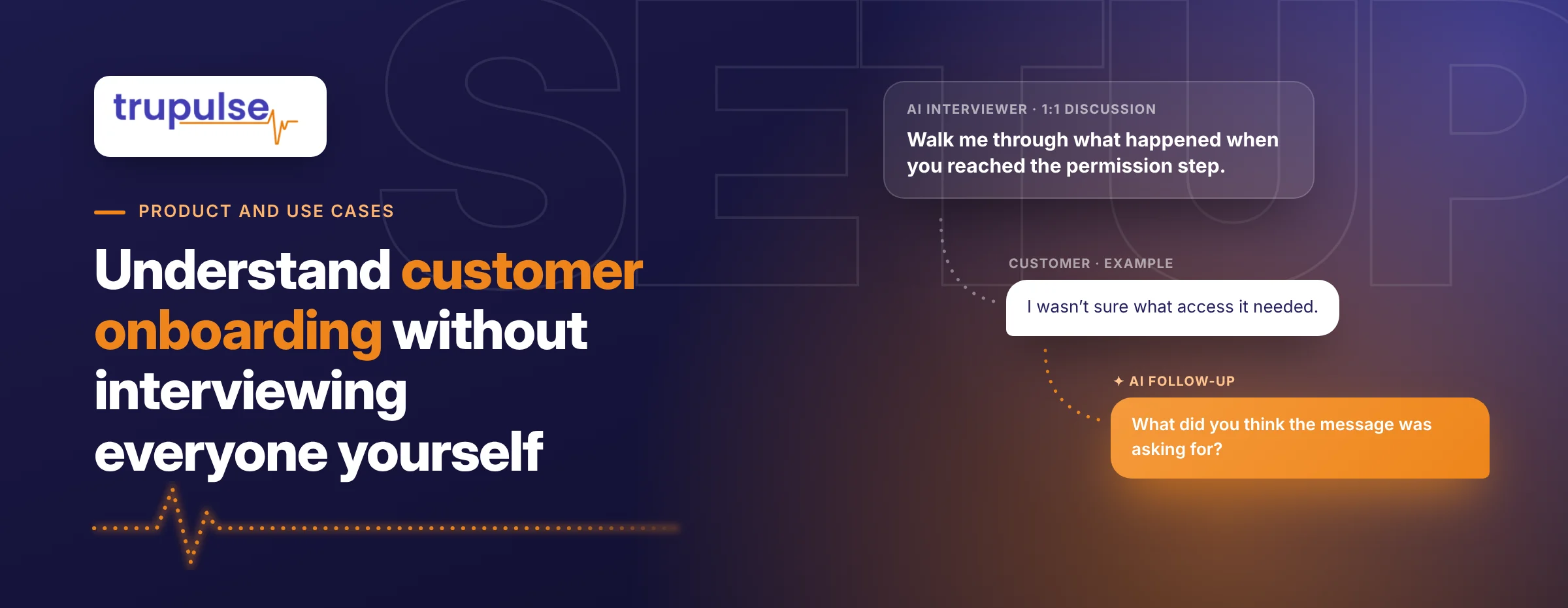
A 1:1 discussion can give someone room to explain their sequence of events. For this hypothetical study, six opening questions could guide the exploration:
- What were you hoping to accomplish when you started setup?
- What happened as you worked through the steps?
- When you reached the teammate invitation, what did you understand you needed to do?
- What did you do next, and what influenced that choice?
- Where, if anywhere, did you look for help?
- What would have made the next step clearer or more useful?
Follow the person's account rather than assuming the invitation caused the pause. If they mention a purchasing approval, ask what they were waiting for. If they completed the step easily, explore what helped. Those details may suggest a different response from adding more instructions.
Put the account beside the activity
Now bring together what customers described and the operational information you already have permission to use. A paused event, a support request, and a customer's explanation can illuminate different parts of the same journey. Keep differences visible rather than forcing every source into one story.
Suppose some participants understood the invitation but weren't sure whether it would contact their colleague immediately. Others were waiting for internal permission. You now have two possible issues: uncertainty about the product behavior and a dependency in the customer's organization.
That doesn't establish how common either issue is among all customers. It does give the team something more specific to investigate. You could test clearer wording with relevant customers, or explore whether a different setup sequence would fit their situation better.
Finish with a decision the team can use
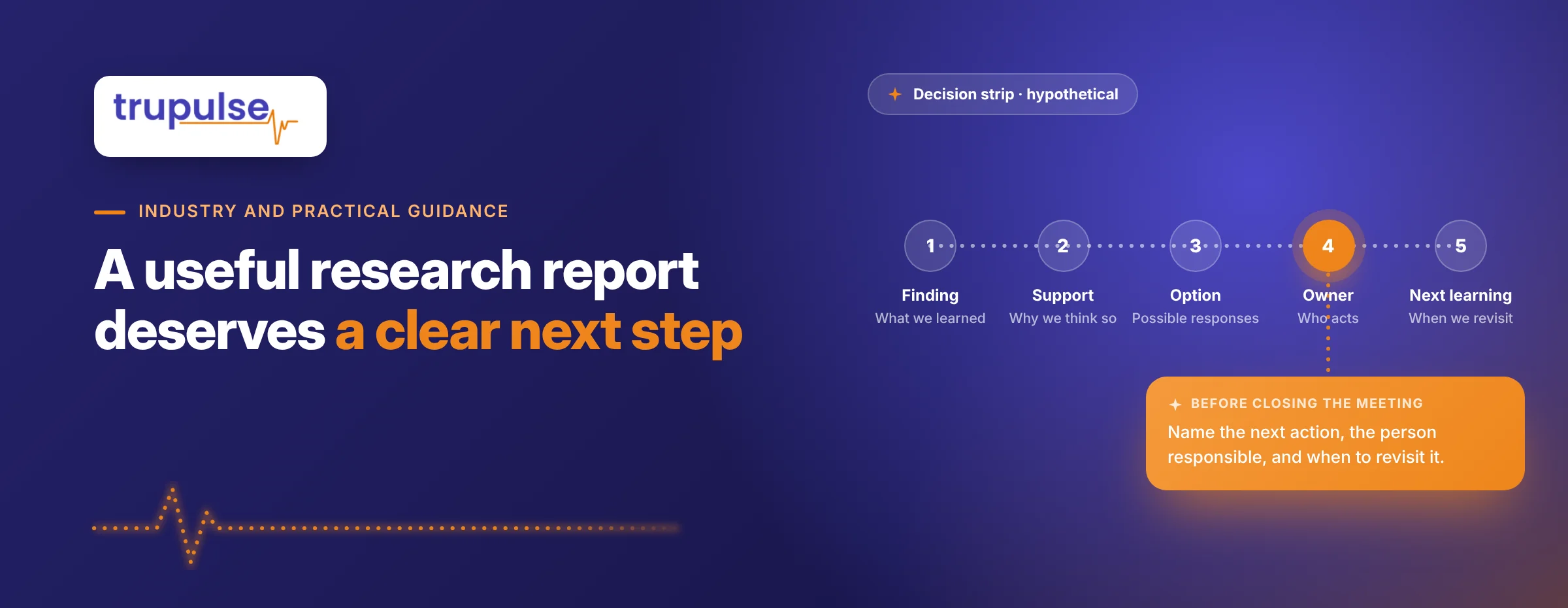
Summarize the moment explored, the experiences heard, the strongest supporting examples, and the next question. Give a proposed change an owner and a way to learn whether it helps. Avoid jumping from an engaging quote straight to a rollout.
TruPulse can support this kind of exploration through AI-led 1:1 discussions and reporting. Its creation agent prepares a topic list from your goals and Q&A, and its Discussion reports include topic summaries, illustrative quotes, Key Insights, and Next Steps. Your team can focus on what the experiences suggest for onboarding.
Choose one point where customer activity leaves you guessing. Write down what you'd like to understand before choosing a fix. That is enough to give your next listening exercise a useful start.