A resident calls because they aren't sure whether their permit application went through. Another completes the process without assistance. A third asks a neighbor for help and never contacts your team. Each has experienced the same service, but the feedback arriving at the office may capture only part of the story.
For a municipal team, a focused listening exercise can help connect those experiences. You don't need to start with a question about every service in the community. Choose one journey, such as applying for a permit, and ask what residents are trying to do and where they need clarity.
Follow the service beyond the form
Imagine your team wants to understand what happens after a resident submits a permit application. The practical question is, “How do applicants know whether they've completed the submission and what happens next?”
That's a manageable starting point. It includes the confirmation message, any follow-up contact, and what someone does while waiting. It also leaves room for residents who begin online and finish with help elsewhere.
The GOV.UK introduction to user research emphasizes understanding people's goals, circumstances, and current experience, including the needs of people who require support. Applied here, the service journey includes the routes residents actually use, not only the digital path the team designed.
Make the invitation fit the people you need to hear
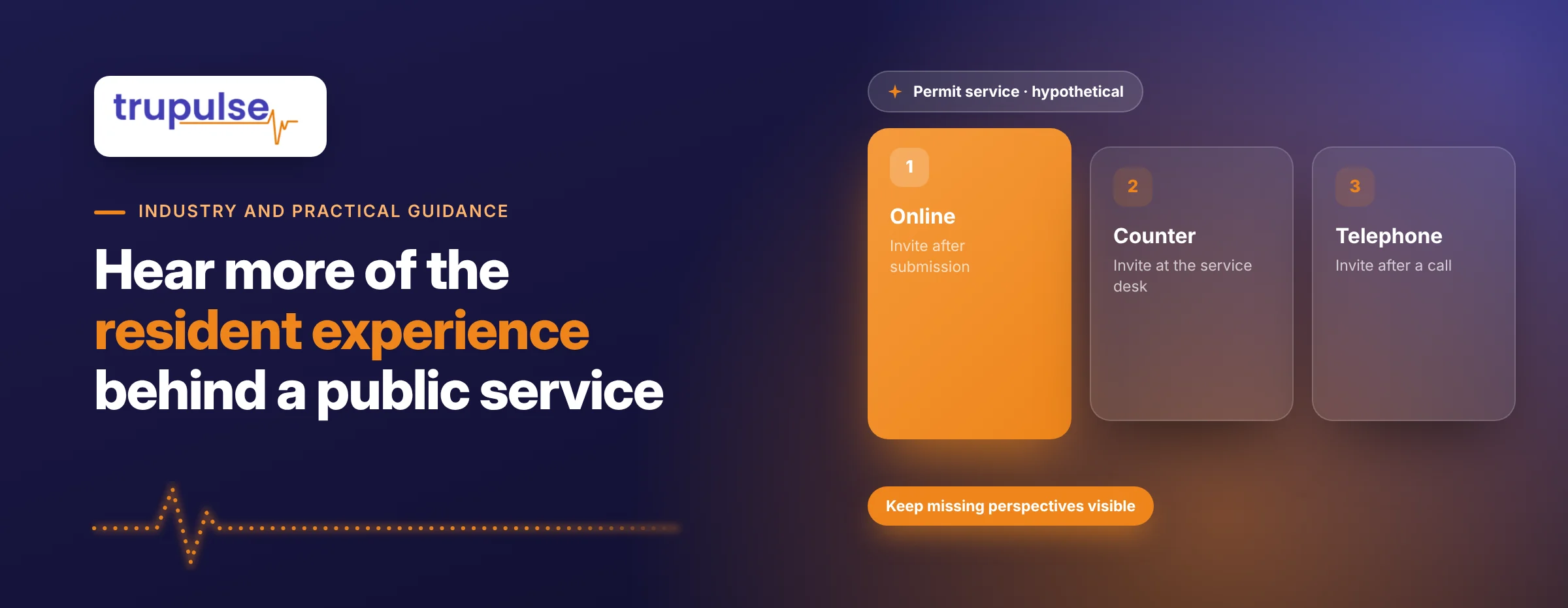
An online invitation can be useful, but it reaches people who encounter and can use it. If your question includes residents who use telephone or in-person help, plan a suitable way to invite them too.
For the permit study, an invitation alongside the online confirmation might reach recent submitters. A service counter could offer an appropriate invitation to people using in-person support. A telephone route could reach another relevant set of experiences. Community organizations may help identify ways to reach intended participants, subject to suitable permissions and arrangements.
For each route, ask two simple questions: whom could this reach, and whom might it miss? A community contact is a route into a conversation, not a spokesperson for every resident. Several routes can broaden what you hear without guaranteeing a representative sample.
Offer the language and participation support your intended participants need and your team can actually provide. Describe those arrangements clearly rather than claiming a service or research format is accessible to everyone.
Ask what happened, then explore the detail
A short question set can keep the conversation centered on the permit experience. Ask what the resident was trying to do, how they submitted or attempted to submit the application, what happened afterward, and how they worked out the next step.
Useful follow-ups include, “What did that message mean to you?” and “Where did you look for help?” Finish with, “What, if anything, would have made that part clearer?” Avoid opening with “Why was the form confusing?” People may have found the form clear but been uncertain about the waiting period.
Suppose a participant describes repeatedly checking their email because they couldn't tell whether anything else was needed. Another says the confirmation was enough. Exploring both accounts could help you understand whether different application circumstances require different explanations.
Keep a simple record of the gaps
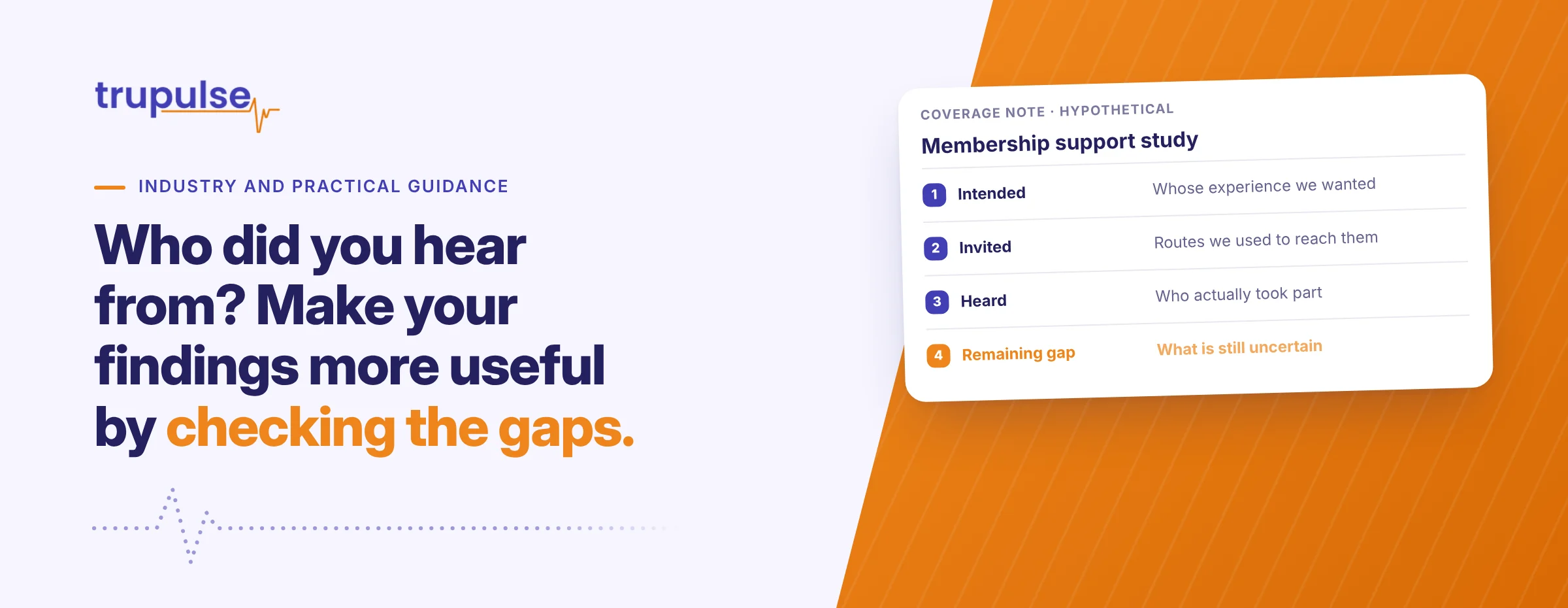
Before discussing the findings, make a coverage note. Record the intended participants, the invitation routes used, the experiences heard, and the perspectives still missing. Include people who abandoned the process if they matter to your question; a post-submission invitation won't reach them.
Then match the finding to that scope. “Participants who contacted telephone support described uncertainty about the next step” tells the reader something concrete. “Residents don't understand the process” reaches beyond what those accounts establish.
This is a study of a service experience. Its findings don't establish a community mandate or replace any required consultation process. The value lies in helping the service team see what deserves closer attention.
Bring the learning back to the service
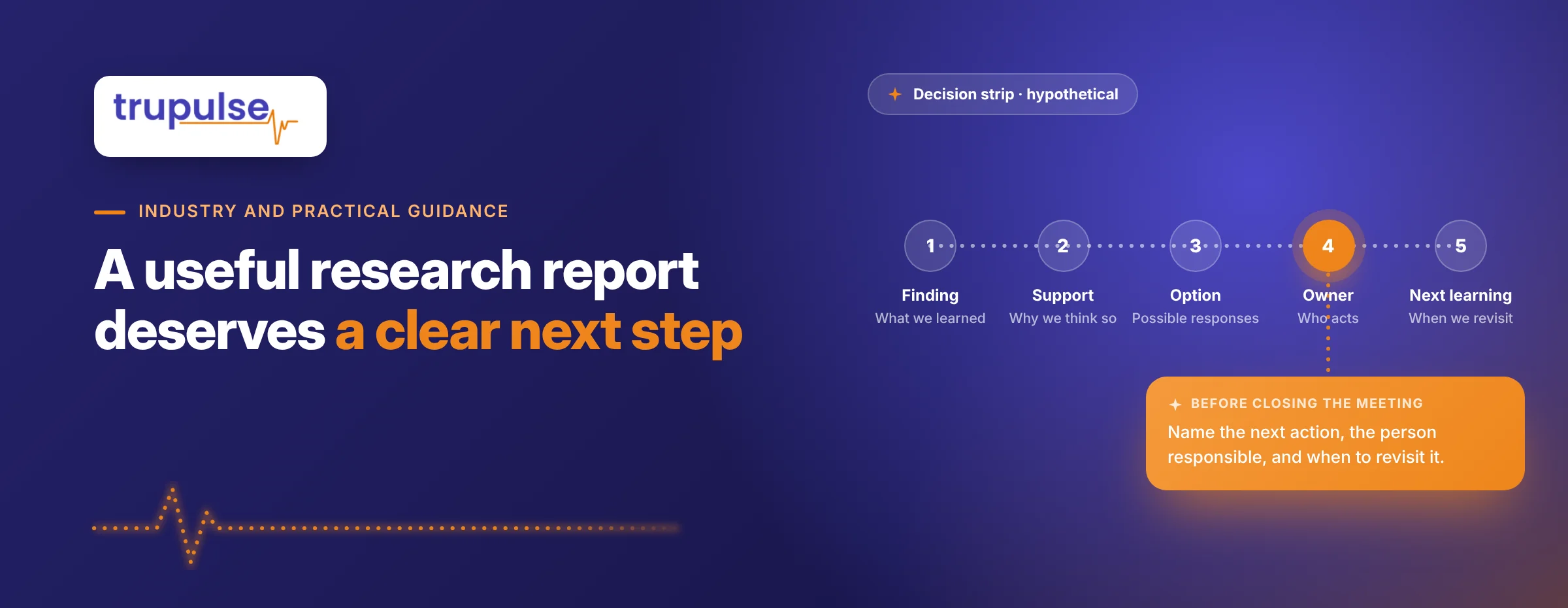
Choose a response the findings can inform. If uncertainty centers on whether an application is complete, your team could explore a clearer confirmation message and check how relevant residents interpret it. Keep an owner and a review point so the idea moves beyond the report.
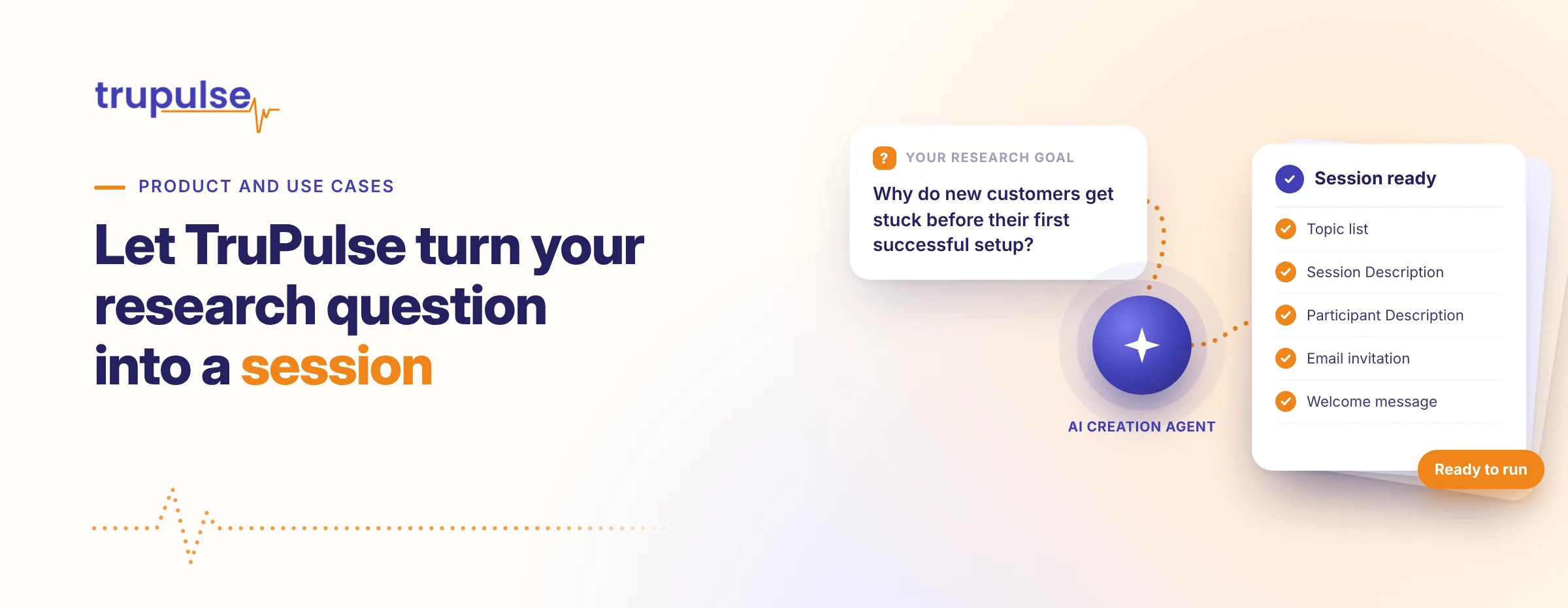
AI-led discussions or surveys may support part of a listening program, while other participation routes remain important for the people you need to reach. Choose the combination around the service question and the intended participants.
Before your next invitation goes out, write down one group it may miss and one reasonable way to hear that experience. For a broader check, continue with Who did you hear from? Make your findings more useful by checking the gaps.