The survey has closed and the dashboard looks encouraging: plenty of responses, detailed comments, and several clear themes. Before the team turns those themes into a statement about all customers or members, one useful question remains.
Whose experiences are in the results, and whose are missing?
That question doesn't diminish the effort people made to respond. It helps you understand where their feedback can guide a decision and where another conversation would be useful. A simple coverage check can give your team that clarity without turning the meeting into a statistics lesson.
Name the people your question is about
Imagine a membership organization studying its support service. The team wants to understand the experiences of new members, established members, and former members. It shares a survey through the current member newsletter and receives thoughtful replies.
The newsletter may be a useful route to current members who read it. It won't, by itself, reach former members who no longer receive it. And members who rarely open the newsletter may be relevant to the service question too.
Write the intended audience in plain language before reviewing the themes. “People who sought support during their first three months of membership” is clearer than “our community.” It helps you decide which experiences should be present and which routes might reach them.
The GOV.UK participant-recruitment guide recommends defining who you need to hear from and checking recruitment against the research question. That is a useful habit even for a modest organizational study.
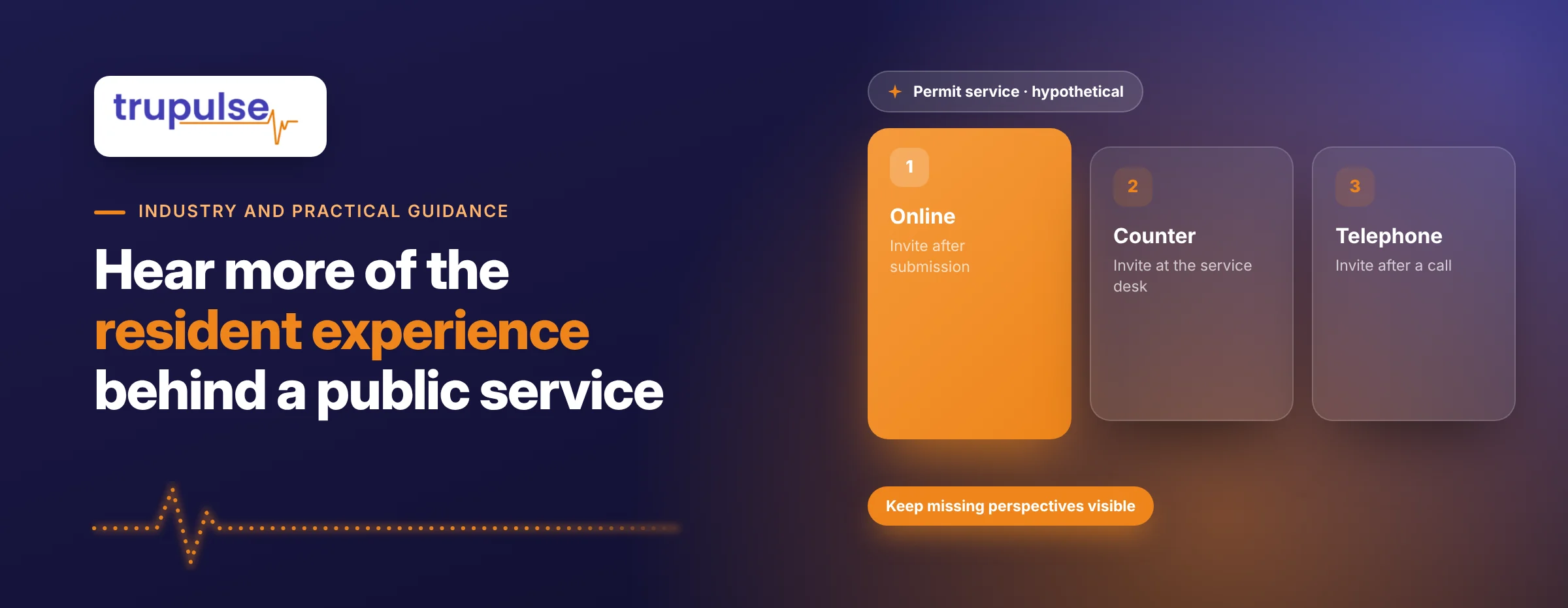
Trace the route from invitation to response
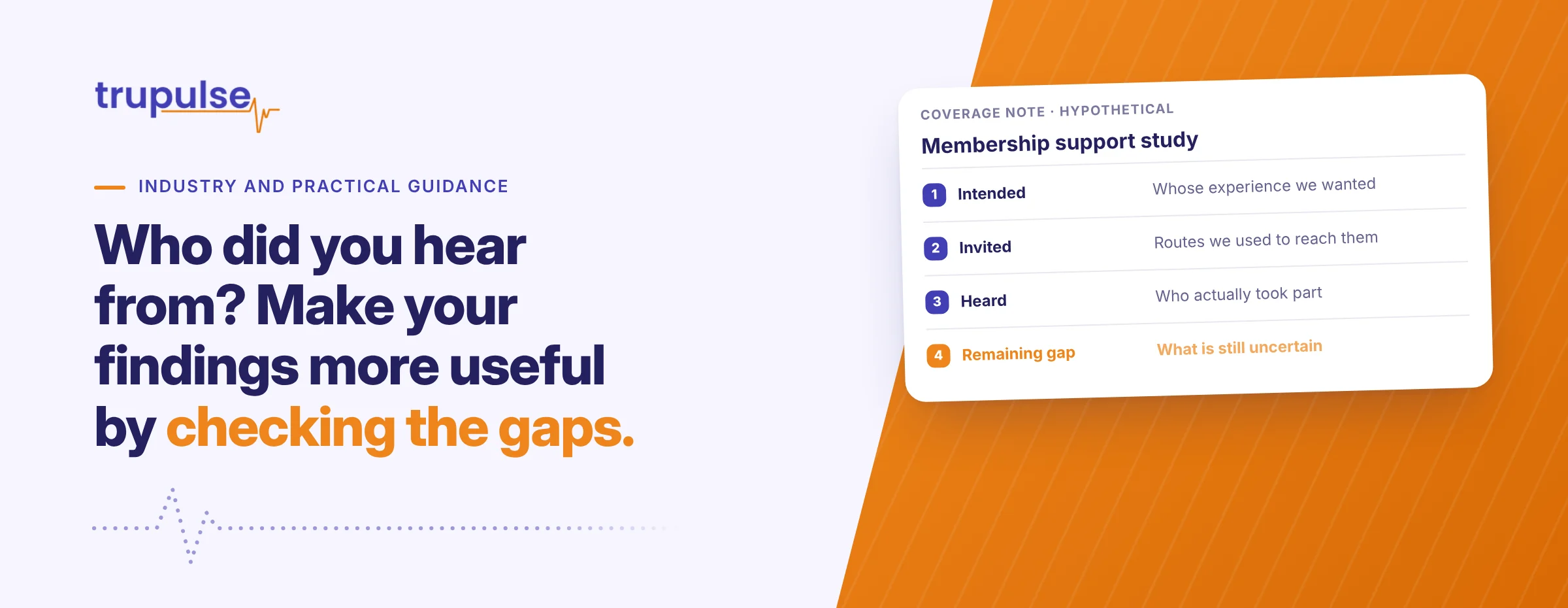
For each relevant group, note four things: the experience you wanted to understand, how people could receive an invitation, whether you heard from them, and any gap that affects the decision. Use the information you can appropriately access; you don't need to collect personal details without a reason.
In the hypothetical membership study, the new-member row might show that current newsletter readers were invited but people who hadn't yet subscribed were missed. The established-member row might show that responses mostly concerned routine questions. The former-member row could remain empty because no invitation route was used.
Those rows suggest different next steps. You might need a suitable route to new members at the support stage, or a separate invitation to former members where contact is permitted. More responses from the original newsletter won't necessarily fill either gap.
Also note what you can't tell. If responses don't include enough information to distinguish relevant experiences, say so. Avoid inferring someone's group from a name, writing style, or a comment that happens to sound familiar.
Keep volume and coverage separate
A large response total can contain useful learning, but it doesn't show that every relevant experience had a fair chance to appear. Likewise, a small set of discussions can reveal an important problem without establishing how common it is.
AAPOR's survey best practices distinguish probability sampling from approaches such as opt-in participation. For a voluntary organizational survey, describe the actual recruitment and response group rather than attaching a conventional margin of sampling error that the design doesn't justify.
Nonresponse doesn't tell you what the missing people think. They may be satisfied, dissatisfied, busy, unable to participate, or unaware of the invitation. Treat the gap as a question to explore, rather than a vote in either direction.
Make the conclusion fit the evidence
Suppose the people who responded describe difficulty knowing where to send a support request. A useful statement is, “Some responding members described uncertainty about the right contact route.” Add the relevant experience groups and supporting examples where those are known.
The statement “Members don't know where to get help” suggests a broader conclusion. You would need evidence suited to that population claim. An honest boundary lets the team use the finding without pretending the study answered a different question.
Your next step may still be worthwhile. A confusing contact page could merit a closer look even before you estimate how many people encounter the problem. Coverage helps shape the scope of the decision; it doesn't mean every action must wait for a population survey.
Use the gap to choose what comes next
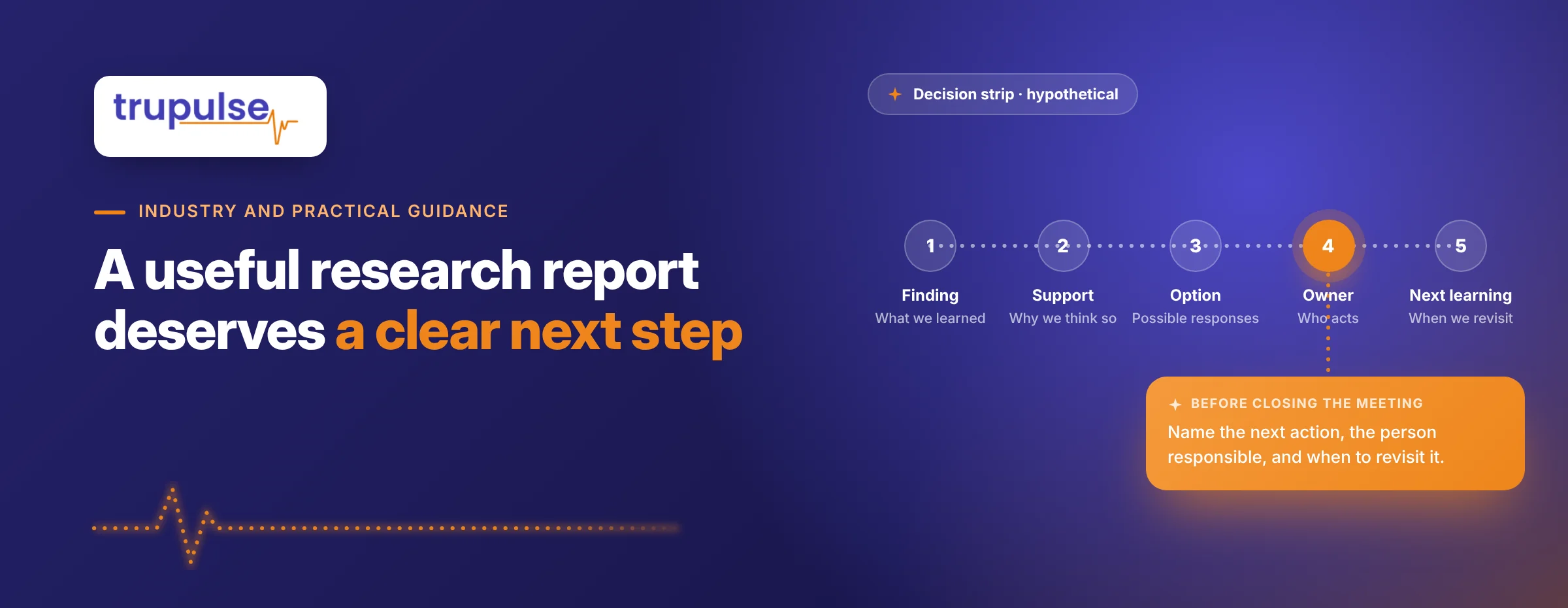
Bring one page to the findings meeting showing who was invited, who was heard, and what remains uncertain. Then ask which gap could change the decision. That keeps the follow-up focused on learning that matters.
AI analysis can organize the responses available to it. It doesn't create the perspectives of people who weren't heard. Keep the participation picture alongside the report, whatever tools helped produce it.
Before approving a broad conclusion, finish this sentence: “These findings describe ” Name the people and … circumstances your evidence supports. Then decide whether the next action needs a closer look at a missing experience.