Your organization has offered the same professional-development sessions for years. A few members attend regularly, others appear occasionally, and some haven't joined a session in a long time. The team wonders whether to refresh the program or promote it more actively.
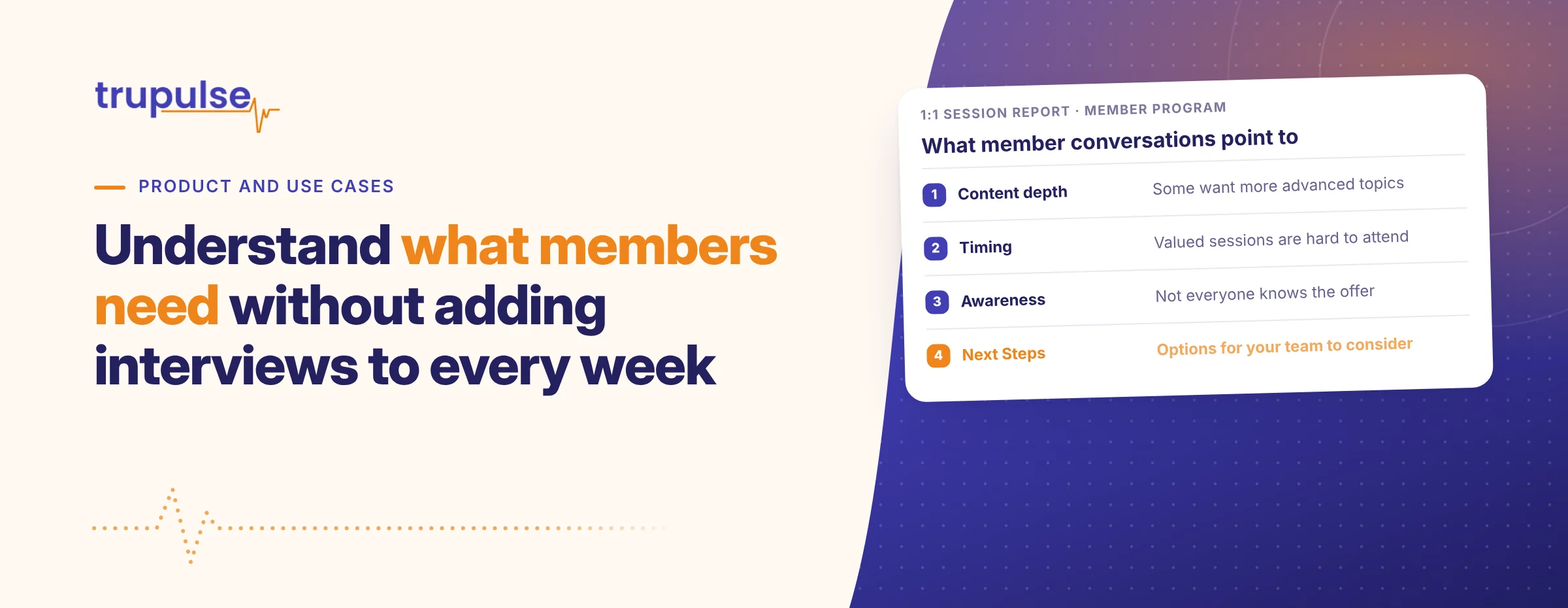
Attendance gives you a starting point, but it doesn't tell you what any of those groups needs. A member might value the program and be unable to attend. Another might attend because it's convenient while wishing for different content. A useful listening exercise makes room for those different explanations before you decide what to change.
Separate the need from the service
Imagine a nonprofit membership organization reviewing its monthly learning sessions. Instead of asking only whether members like the events, start with what they are trying to accomplish in their work or community role. Then explore where the program fits.
You might discover that the question isn't simply “Which topics should we offer?” It could be about access to peers, a practical skill, confidence in a new responsibility, or knowing where to find reliable advice. These are possibilities to investigate, not findings about your membership.
The GOV.UK guide to research planning recommends turning assumptions into research questions. Try changing “Members need a shorter event” into “How does the event's length affect whether members can use it?” You can then listen for an answer you didn't anticipate.
Invite more than the familiar faces
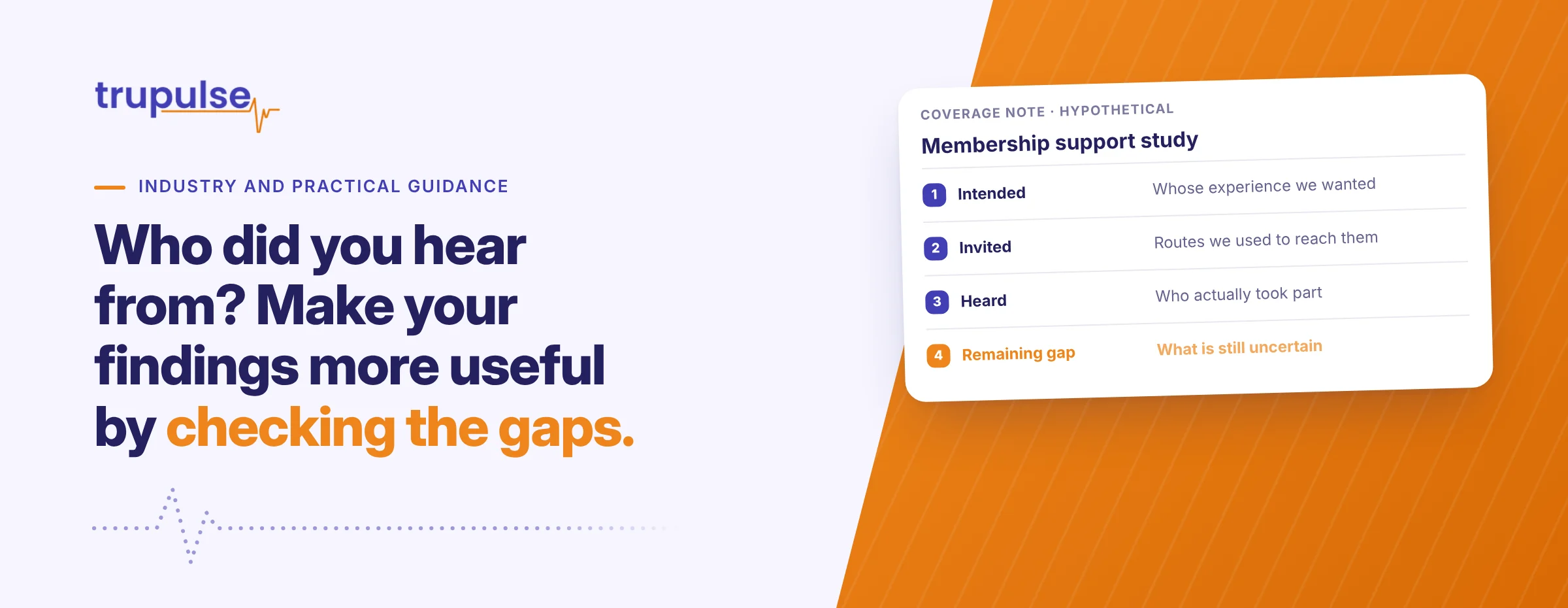
Build your invitation plan around the experiences you need to understand. For the learning program, consider three starting groups: regular attendees, members who attend less often or never, and former members who can appropriately be contacted.
For regular attendees, explore what they use and what still feels missing. For less-active members, explore awareness, relevance, and practical access. With former members, ask about their experience during a clear period rather than expecting them to explain the current program.
People can belong to more than one meaningful group. A long-standing member might never attend a session, while a new member attends everything. Note those differences when reviewing responses. Former members' views add a perspective; they don't stand in for everyone who left.
Choose participation routes that fit your members. An invitation only through the event registration list is unlikely to help you understand members who never register. Check the contact permissions and participation information before reaching out.
Ask about the experience behind participation
Here are eight original prompts you could adapt for the hypothetical learning-program study. You don't need to ask them all in every setting; use the ones that answer your immediate question.
- What kinds of support or learning are most useful to you in your role right now?
- What, if anything, do you know about our learning sessions?
- Tell me about the last time you considered attending one.
- What influenced whether you took part?
- If you attended, what did you use afterward, if anything?
- If you wanted to attend but couldn't, what got in the way?
- Where else do you go for this kind of support?
- What would make a future session more relevant or easier to use?
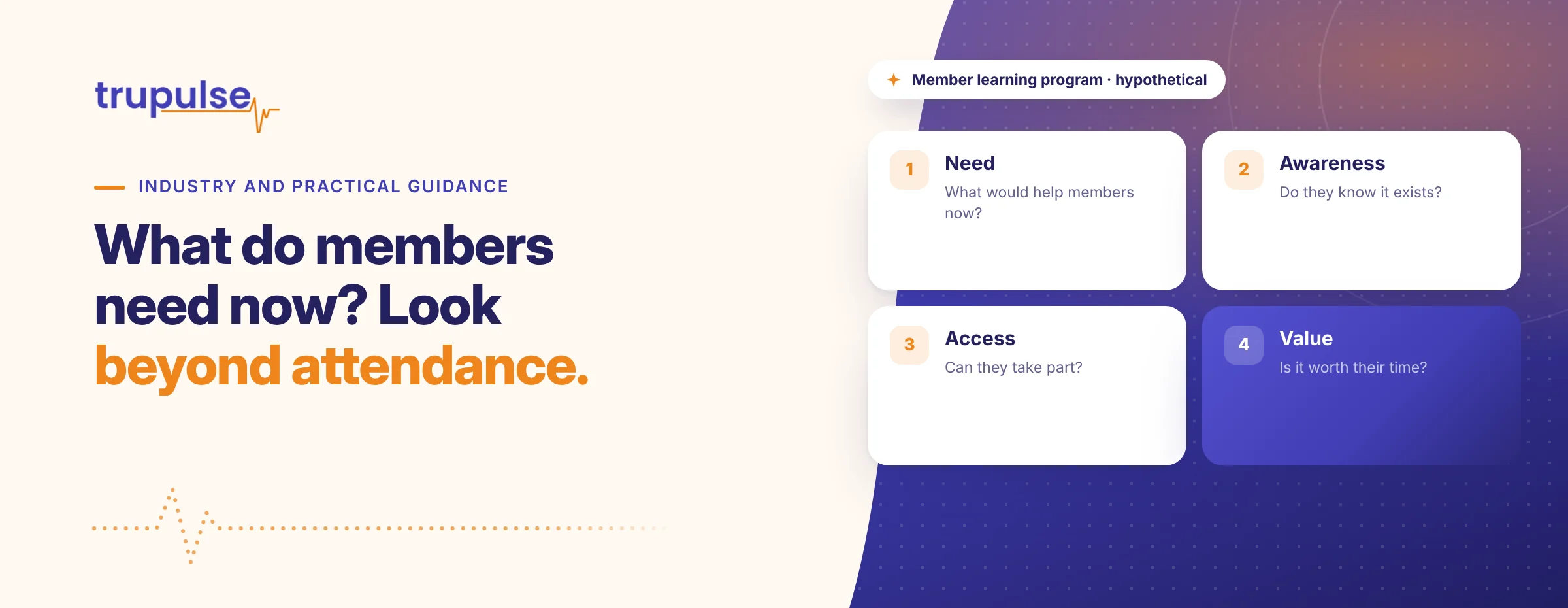
The sequence lets need, awareness, access, and value emerge separately. Someone who didn't know the sessions existed has a different experience from someone who attended and found the content unsuitable. Combining those accounts under “low engagement” would hide the distinction.
Let different answers suggest different responses
Suppose participants describe useful content but inconvenient timing. One possible next step is testing another time or format. If people don't recognize the program name, clearer communication may be worth exploring. If they understand the offer but need something else, a new message alone won't address that gap.
Look for experiences that challenge your preferred explanation. An enthusiastic attendee may still suggest a major improvement. A less-active member may feel their membership is worthwhile for reasons unrelated to events. Keep the service decision separate from assumptions about a person's commitment to the organization.
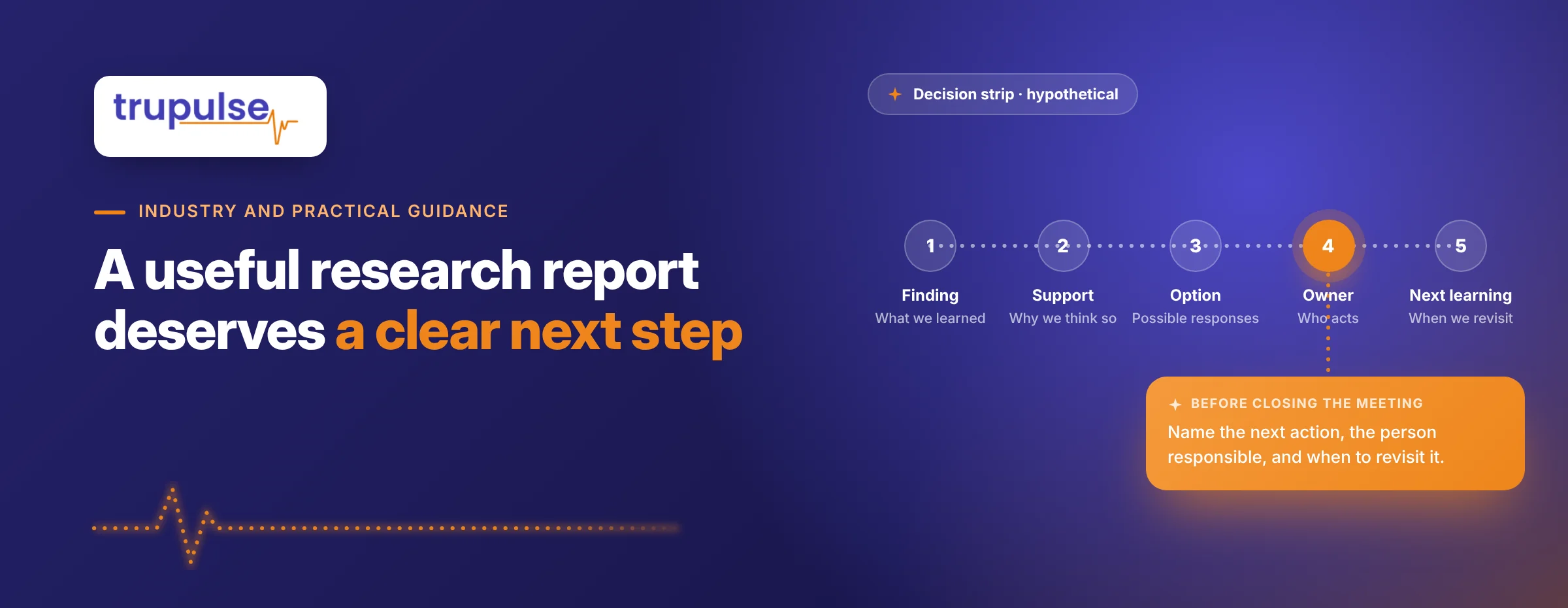
Bring the findings back to a practical choice: what could you try, who would it serve, and what would you want to learn from it? Include the perspectives you haven't reached so the next step has an honest boundary.
Make the next conversation easier
TruPulse can help you explore member experiences through AI-led 1:1 discussions and topic-based reporting. Its creation agent can prepare the session from your goals or a template, helping your team spend more time considering what members described and what to try next.
Start with one service and one unanswered question about its place in members' lives. Ask a regular participant, a less-active member, and someone with a different recent experience what you might be missing. Let that contrast shape the study you commission.