A leadership meeting has a detailed update on employee feedback and a separate report on customer experience. Elsewhere, a service team is trying to understand why people find a particular process difficult. The reports share an organization, but the questions don't yet meet.
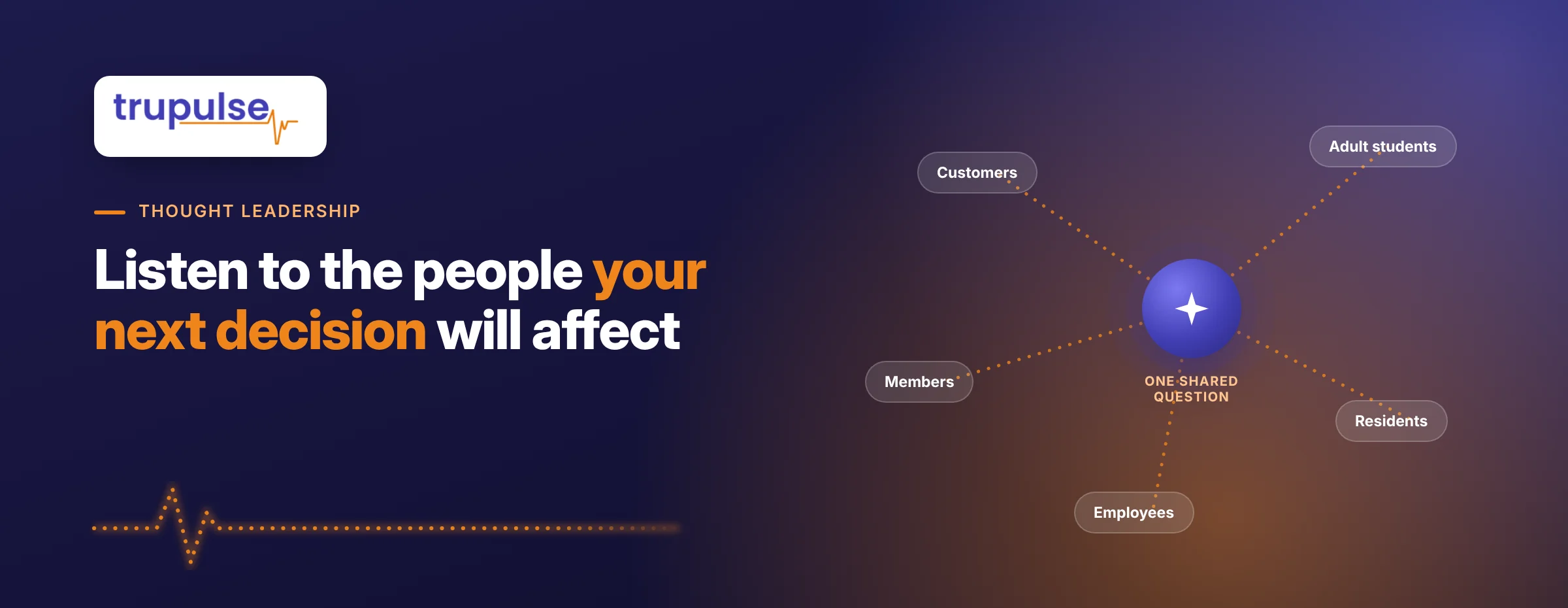
A useful listening strategy starts with the decision and the people who experience its consequences. Employees belong in that picture. So do the customers, students, members, or residents whose journey the organization is trying to improve. Department boundaries can organize the work without deciding whose experience matters.
Start outside the reporting structure
Imagine an organization redesigning how people arrange an appointment. An internal discussion might focus on staffing and handoffs. The person making the appointment may be thinking about whether they selected the right service or can attend at the offered time.
Both perspectives matter, and they answer different questions. The team needs to understand how the process works for staff and how it meets the purpose of the person using it. Hearing only one side can leave an important part of the decision unexplored.
The GOV.UK introduction to user research includes the needs of service users and the people who provide or support the service. The broader implication is useful across organizations: start with the experience surrounding the decision, then decide whom to hear.
That doesn't mean every stakeholder belongs in every study. It means the decision should have a clear audience question before the team defaults to its usual invitation list.
The same habit travels across different settings
For a business revising customer onboarding, the decision might concern the next setup step. Customers can describe what they were trying to accomplish and what happened. Employees delivering support can explain the handoffs they encounter. Those accounts can inform the same decision without being interchangeable.
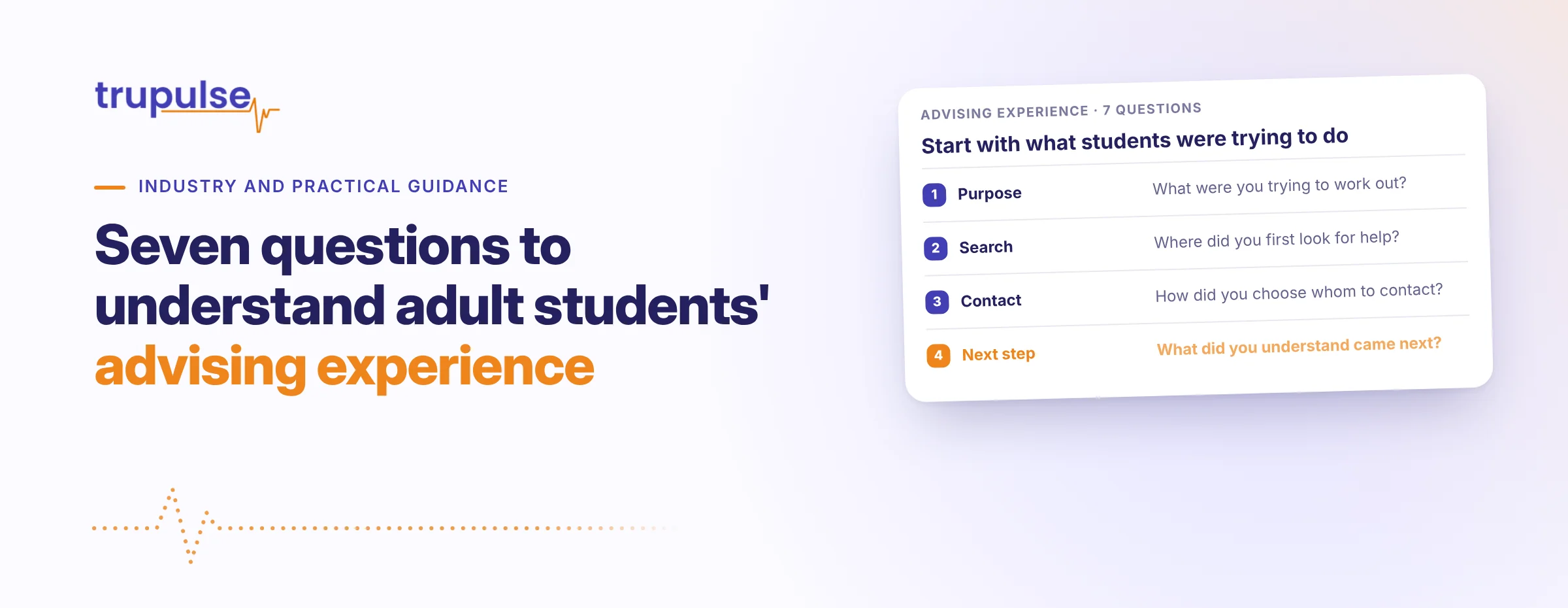
For a college considering its advising appointment routes, adult students can explain how they find and choose a route. Advising staff can describe how appointments are received and managed. A useful question is where the two views of the journey fail to connect.
For a nonprofit refreshing a membership service, members can explain where the offer fits their current needs. The program team can explain its practical choices. The question may be what to preserve, what to reconsider, or which experience has been missing from the conversation.
For a local government reviewing permit confirmation, residents can describe how they knew what to do after submission. Service staff can describe the information they receive and the queries they handle. The decision could concern which part of the confirmation needs further exploration.
For an employer changing an internal request process, employees are themselves the people using the service. Their recent experiences can help the team understand what becomes clearer and what remains difficult. The audience follows the question, even when the service is entirely internal.
These are hypothetical applications of one habit: connect the decision to the experience, then identify the people who can illuminate it. Each setting still needs its own participation arrangements and method choice.
Separate teams can still share a useful question
There are good reasons for listening programs to sit in different departments. The audiences, systems, responsibilities, and participation terms may differ. A customer-service study and an employee discussion shouldn't be combined simply because both contain feedback.
The opportunity is to coordinate the learning. If the appointment team hears that users can't identify the next step, what related question should it explore with the people handling requests? If staff describe a recurring handoff problem, whose service experience would help the team understand its consequences?
Keep the supporting material within the access arrangements appropriate to each study. A shared decision question doesn't require pooling identifiable responses or placing everyone in one session. Teams can connect appropriately summarized findings while preserving their scope and differences.
This makes cross-department listening a conversation about the service rather than a demand for one giant dataset. The organization can learn from several perspectives without treating them as one undifferentiated voice.
Expand where the missing view matters
A broader listening strategy doesn't have to begin with a broader project. Choose a decision already on the table and identify the experience you understand least well. That gives the next conversation a manageable purpose.
AI-led discussions and surveys may help carry part of that work, but the invitation list still reflects a human choice about whose experience deserves attention. A capable listening tool is most useful when the organization directs it toward a meaningful gap.
At your next planning meeting, ask, “Who will experience this choice, and which of those people have we actually heard from?” Let the answer guide the next study, even when it takes the conversation beyond the department that first raised the question.